A Living-Room Screening Built Around One Question
Plan a living-room screening around one clear question, with practical hosting choices that help guests settle in, watch comfortably and take part afterwards.
For a living-room screening, the question is often less “What should we discuss?” than “How do I make this easy to host?” A single prompt can give the evening a thread, but the practical choices—seats, sound, timing and a clear end—determine whether anyone has the energy to follow it. The aim is a film night, not a seminar with better cushions.
What makes a living-room screening question useful?
A useful prompt directs attention to something viewers can observe in the film and allows more than one reasonable response. “When does the gallery begin to feel like a refuge?” gives people a feature to watch for; “Who is the villain?” can turn the evening into a guessing contest.
Keep the wording short enough to remember without checking a phone. Questions about a character’s choices, a shift in sympathy or the way a setting changes often work well. Avoid prompts that depend on knowing the director’s intentions or reading an interview in advance.
Choose a question that suits the gathering. Friends who know one another may welcome a personal angle, while a mixed group may prefer to focus on what appears on screen. Either way, the prompt should give attention a direction, not demand a correct answer.
How do you prepare the room and the timing?
Before sending the invitation, settle the practical details: where the film will come from, whether the group needs subtitles, and when you expect the screening to end. Mention the film and the prompt in the invitation, and say whether guests should avoid spoilers in conversation beforehand.
Check the playback source and audio settings before people arrive. Put seats where everyone can see the screen, make sure the sound reaches them, and keep a clear path to the door. Set water and snacks somewhere guests can reach without crossing the viewing area; a complicated spread is an efficient way to spend the film in the kitchen.
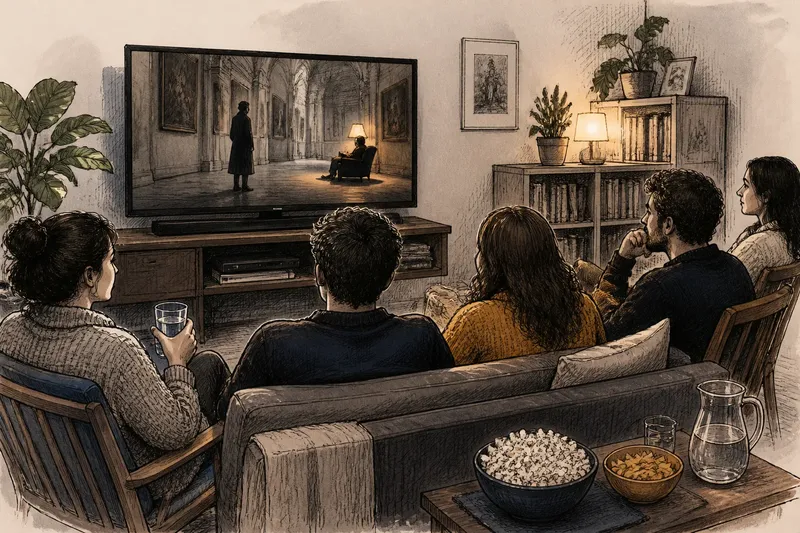
Say you have a small sitting room, a television with built-in speakers and a disc player. You plan to host a film with subtitles for six invited friends, but the room has four chairs and a sofa. You move the chairs so they do not block the screen, put two cushions on the sofa, turn on the subtitles during the opening credits, and ask a guest to sit in each place before the screening; if anyone cannot read the text comfortably, you rearrange the seats or choose a different playback setup before starting.
What should guests know before the film starts?
Once everyone has arrived, give the prompt in one sentence and explain what happens afterwards. For example: “Notice when the gallery starts to feel more like a refuge than a trap; after the credits, anyone who wants can name one moment that shaped their answer.” That is enough context without steering people towards a preferred interpretation.
Let guests hang up coats, find a seat and get a drink before pressing play. If someone has not seen the film, check that it is suitable for the group and does not require advance context to follow. Tell people where the controls are and invite them to silence phones if they can. A short request is clearer than a speech about cinema etiquette.
How can you keep the screening comfortable?
Start the film and leave it alone unless the group has agreed to pause. Avoid stopping to explain a clue, identify a location or point out a change in a character’s story. The prompt is an invitation to pay attention, not a scavenger hunt with the host holding the answer sheet.
Agree on a simple approach to interruptions. If someone needs a drink or a brief break, let them move quietly; pause only if the group has asked for pauses or a practical problem makes one necessary. If the sound becomes hard to hear, adjust the volume between scenes rather than talking over the film.
Imagine the fictional film shows a caretaker in a cold, echoing gallery, then later places a visitor beside a reading lamp. You notice the shift but keep watching rather than announcing it during the scene. Afterwards, you can mention the contrast; another guest may have noticed something that changes how it reads.
How can you start the conversation without running it?
Let the credits finish and give people a moment before speaking. Return to the original prompt, then invite anyone who wants to share a moment that shaped their answer. You can offer an easy route in—naming a scene or image—without asking guests to deliver a polished interpretation.
If one person begins a long explanation, bring the discussion back to the room with a practical question such as, “Would anyone else like to add something before we move on?” Do not make each comment answer to the host, and do not hurry to settle a disagreement. A shared screening can end with several interpretations still standing.
If the conversation stalls, offer one specific follow-up: “Was there a moment that changed your first impression?” If nobody has more to add, let the silence stand or move on to tea. The film does not need a second act after the credits.
What questions do hosts often ask?
How many people should I invite?
Invite a number the room can seat with everyone able to see and hear. If guests would need to lean around one another, reduce the invitations or move to a room with a clearer layout.
Should I send the prompt in advance?
Yes, if the prompt is short and does not reveal a plot turn. If it would spoil a surprise, give it just before the film instead and keep the invitation to the title, start time and basic arrangements.
What if someone has already seen the film?
Ask them to avoid revealing major turns and to take part without becoming the evening’s answer key. If they cannot discuss it without spoilers, agree that they can keep their comments to scenes the group has already watched.
What if the group is ready to leave straight after the credits?
Make the conversation optional and keep the first invitation brief. If nobody wants to stay, thank them and end the evening without treating a short discussion as a hosting failure.
What is not worth the effort?
Skip printed worksheets, elaborate seating plans, a fresh prompt for every act and decorations that compete with the film. They add preparation without solving the practical questions of whether people can see, hear and get comfortable. A readable prompt and a bowl of snacks are usually enough; the sofa does not need a museum label.
It is also not worth preparing a speech about the film’s hidden meaning. If you want to share background, keep it brief and offer it after guests have had a chance to respond. The first interpretation heard can quietly become the one everyone else feels obliged to address.
How should you bring the evening to a close?
After the first few comments, make the ending explicit but undemanding: ask whether anyone wants to add a final thought, then thank the group and move on to tea or clearing the room. If conversation continues naturally, let it; if people are ready to leave, they should not have to wait for a formal verdict.
For a living-room screening built around one question, the useful result is a gathering that was comfortable to attend and easy to host. Sort out the seating, sound and finish time first; the prompt can then do its modest job without requiring anyone to take notes or agree on what the film meant.